


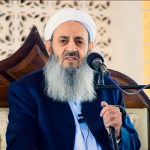
Shaikh-ul-Islam Mawlana Abdolhamid, speaking today, December 26th, 2025, at the Friday prayer ceremony in Zahedan, referred to the government’s submission of the next year’s budget to Parliament and emphasized the need to “combat rising inflation instead of increasing the budget percentage.” He described “adjustments in domestic and foreign policies” and “flexibility in negotiations” as highly effective measures for preventing further inflation.
🔹 Rising Inflation And The Sharp Decline In The Value Of The National Currency Have Alarmed The Public
According to the official website of the Office of the Sunni Friday Imam of Zahedan, Mawlana Abdolhamid stated: The President has submitted the 1405 budget to Parliament. In this budget, given the existing inflation and the weakness of the national currency, an increase of nearly 20 percent has been considered in allocations to various organizations, institutions, and bodies. However, in my view, even if this increase were 50 percent or more, it would still not resolve the problem, because the pace of inflation and the depreciation of the currency far exceed the budget increase envisaged for the coming year.
He added: Rising inflation and the sharp fall in the value of the national currency against all foreign currencies have placed pressure on all segments of society, in both urban and rural areas, harmed companies and factories, damaged trade, and left people anxious and unsettled.
🔹 “Adjustments In Foreign Policy” And “Flexibility In Negotiations” Can Reduce Inflation And Restore The Currency’s Value
The Friday Imam of Zahedan noted: The best approach is to confront inflation and rising prices instead of increasing the budget, and to restore the value of the currency. Lower inflation and a stronger currency give people hope and prevent them from feeling trapped in their daily lives.
He emphasized: Sound policies can reduce inflation and high prices and restore the value of the currency. There is a need to further adjust foreign policies and, through negotiation, dialogue, and a degree of flexibility and moderation, both prevent another war—whose possibility is increasingly being discussed—and curb inflation and the collapse of the currency’s value.
🔹 Both Sides Must Show “Flexibility” In Negotiations; War Is Harmful To Both
Mawlana Abdolhamid stated: Beating the drums of war by either side leads to higher inflation. Both sides must avoid war, because war would not only cause losses and casualties for Iran, but would also result in damage for Israel, the United States, and others in the region. Therefore, the parties should show flexibility in negotiations; this would benefit everyone and the entire region.
He added: Harsh slogans and extreme positions expressed in Iran in the past, which heighten sensitivities and provoke the country’s adversaries, should be avoided. At times, provocative statements are heard from individuals who are not ordinary citizens, but who hold positions in centers of power, in Parliament, or among military or political officials—statements that ultimately harm the nation and the country.
🔹 The Need For “Adjustments In Domestic Policies”; Constructive Criticism Must Be Tolerated
The Friday Imam of Zahedan also emphasized “adjustments in domestic policies,” stating: Domestically, policies must also be moderated. The voices of the people should be heard more, and constructive views and criticisms expressed by Iranian citizens should be tolerated. Arrests should be avoided.
He added: Capacity and tolerance must be increased. If there are mourning ceremonies, or if people gather at the graves of their loved ones, such matters should be tolerated. The greater the space for dialogue, constructive criticism, and tolerance within the country toward Iranian citizens, the more this will serve the interests and well-being of the nation and contribute to reducing inflation and strengthening the value of the currency.
🔹 Religious Seminaries And Religious Institutions Should Not Use State Funds; They Should Operate With “Trust In Allah” And “Reliance On The People”
Continuing his remarks, Mawlana Abdolhamid referred to the allocation of funding for religious seminaries and religious institutions in next year’s budget and stated: Very large sums have been earmarked for religious seminaries and religious bodies. Our recommendation is that religious seminaries, religious centers, and religious institutions preserve their independence and refrain from using public funds and state budgets; rather, they should operate with trust in Allah Almighty and reliance on the people, and not lose their popular, grassroots character.
He added: Throughout history, scholars, mosques, and religious seminaries have stood alongside the people, and the people have stood alongside them. Mosques and religious centers should function to the extent that people are able to support them. In many cases, an activity carried out on a more modest scale is more effective than one conducted with the backing of large government budgets.
The Friday Imam of Zahedan noted: Alhamdulillah, this has been our approach, as well as that of many other religious seminaries—that we have never used state funds, and we have no intention of doing so in the future either. We believe that the assistance provided by the people contains goodness and blessing, and leads to progress and development.
He emphasized: This is a policy within religious seminaries to preserve their independence and not become dependent on any government or system—even if it is an Islamic government or system—so that they may better fulfill their duty of enjoining what is right (amr bil-maʿruf) and reforming society, governments, and states in every era.
🔹 Mawlana Din Mohammad Was “A Humble Scholar” And “A Benevolent Human Being”; His Passing Is “A Great Loss” For The Region
In another part of his sermon at the Zahedan Friday prayer, Mawlana Abdolhamid referred to the passing of Mawlana Din Mohammad Dorrakani, the director of the Taʿlim al-Qur’an religious school in Shourshadi Kourin, and stated: The passing of Mawlana Din Mohammad, may Allah have mercy on him, is a very great and heavy loss. He was a humble scholar, a writer and researcher, and a benevolent and prayerful person. From both scholarly and practical perspectives, Mawlana Din Mohammad—may Allah have mercy on him—was a valuable asset for all the people and for the region. May Allah Almighty compensate the region for the loss caused by his passing.
🔸 At the conclusion of his remarks, the Friday Imam of Zahedan referred to the recent rainfall in the region and, while advising the people to show gratitude (shukr), prayed for the continuation of these rains.








Comments