

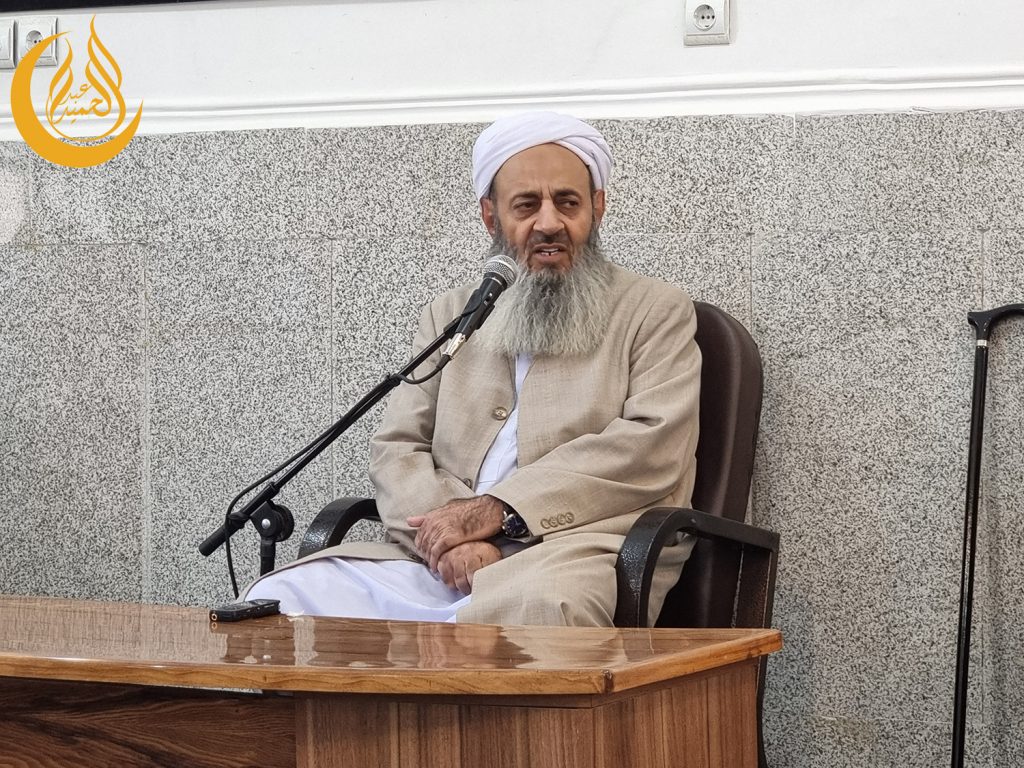
Shaikh-ul-Islam Mawlana Abdolhamid, today Sunday (December 21st, 2025), during the weekly session of the instructors of Dar al-Ulum Zahedan, expressed serious concern over the “intensification of security pressures on the Makki Complex” and stated: Despite the promises made by officials, unfortunately no improvement has occurred, and security pressures and restrictions have once again intensified.
According to the Information Base of the Office of the Sunni Friday Prayer Leader of Zahedan, Mawlana Abdolhamid said: Officials had stated that if the issue of the “Bloody Friday” were resolved, all the problems that had arisen would be addressed; however, unfortunately, officials did not fulfill their promises, and concerns regarding the intensification of pressures and restrictions remain as before.
🔹 They Say Do Not Criticize The Country’s Problems; Empathy With The People Is A “Religious And Human Duty”
🔹 “Constructive Criticism” Leads To “Reform”; One Who Lacks The Will To Reform Does Not Welcome Constructive Criticism
The Friday Prayer Leader of Zahedan continued: They say do not speak about or criticize the country’s problems, whereas we are citizens of this country—and not ordinary citizens. Our people regard us as their leaders and have expectations of us. In the current conditions, people are hungry and their pockets are empty, and expressing empathy and even weeping with the suffering people in such circumstances is a religious and human duty.
He emphasized: If we have voiced criticism, it has been constructive, and we have also offered solutions. Our motivation is goodwill and reform, and we have no other agenda.
Mawlana Abdolhamid further stated: Constructive criticism aimed at reform is effective and beneficial, and one who lacks the will to reform does not welcome constructive criticism. We believe that without constructive criticism, despotism emerges. If an official or a religious scholar is never criticized, they may assume there are no flaws or shortcomings in their work; but when they are criticized, they seek to reform and address their deficiencies.








Comments