

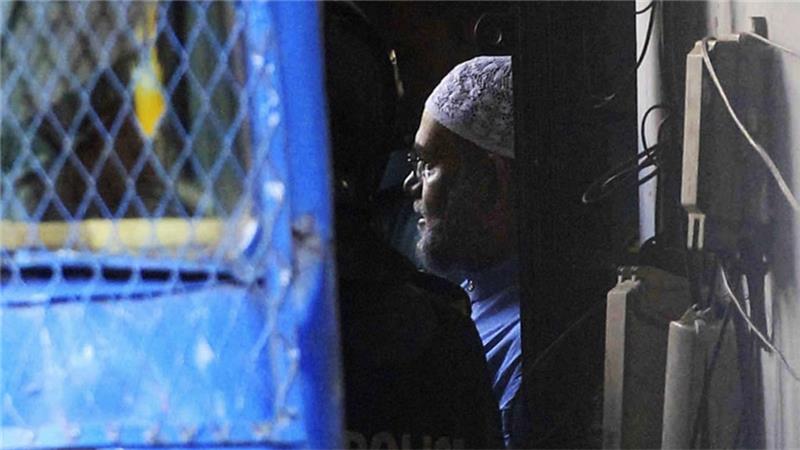
Bangladesh has executed a wealthy tycoon and top financial backer of its largest opposition party after his family paid him a final visit.
Mir Quasem Ali, a key leader of the Jamaat-e-Islami party, was hanged on Saturday after being convicted by a controversial war crimes tribunal for offences committed during the 1971 independence conflict with Pakistan.
“The execution took place at 10:35 pm (1635GMT),” said Anisul Huq, the country’s law and justice minister.
Ali had been imprisoned at the Kashimpur high security jail in Gazipur, some 40 km north of the capital Dhaka.
After the Supreme Court rejected his final appeal against the penalty on Tuesday, Ali declined to seek a presidential pardon, which would require an admission of guilt.
Ali was a key commander of the pro-Pakistan militia in the southern port city of Chittagong during the 1971 war, and later became a shipping and real estate tycoon.
Past convictions and executions of high-profile Jamaat leaders have triggered violence in Bangladesh, which is polarised along political lines.
Russel Sheikh, a senior Gazipur police official, told the AFP news agency that officials took “highest security measures” ahead of the execution for fear of violence by his supporters.
“More than 1,000 police have been deployed in the district,” Sheikh said.
Major blow
The Supreme Court’s decision to reject Ali’s appeal was a major blow for the Jamaat-e-Islami party, which the 63-year-old tycoon had helped to revive in recent decades.
Five opposition leaders have been executed for war crimes since 2013. Ali was the last prominent leader of Jamaat to face execution.
The war crimes tribunal set up by the government has divided the country, with supporters of Jamaat and the main opposition Bangladesh Nationalist Party (BNP) branding it a sham aimed at eliminating their leaders.
Ali was convicted in November 2014 of a series of crimes during Bangladesh’s war of separation from Pakistan, including the abduction and murder of a young independence fighter.
His son Mir Ahmed Bin Quasem, who was part of his legal defence team, was allegedly abducted by security forces earlier in August, which critics say was an attempt to sow fear and prevent protests against the execution.
Source: Aljazeera










Comments